[Part 1] The Dawn Era – Birth of the Fully Electronic Mount
Beginner
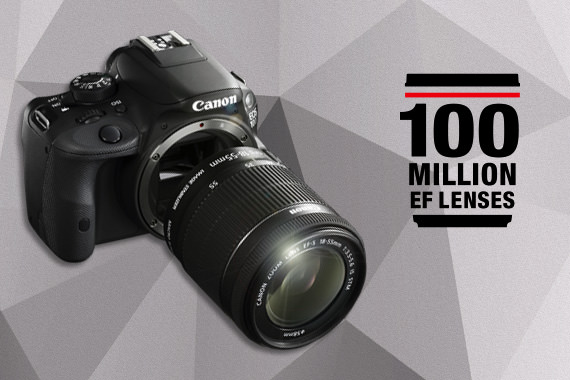
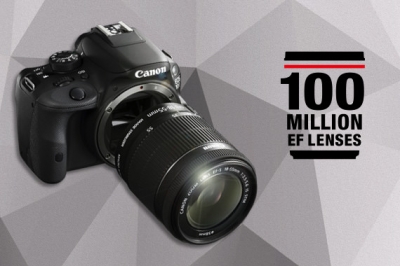
In April 2014, the cumulative production of Canon's "EF lenses" broke the 100 million record.

- 0
- 0
- 0
In April 2014, the cumulative production of Canon's "EF lenses" broke the 100 million record.
In April 2014, the cumulative production of Canon's "EF lenses" broke the 100 million record. How did the new mount system win the trust of photographers with mechanical control completely eliminated from the traditional FD mount? This article tells you more about the history of the evolution and the expectations from different photographers. (Reported by: Kazunori Kawada)
Pages: 1 2
In March 1987, Canon released the "EOS 650", the first Canon camera that was built in with a professional AF system. This also marked the birth of the EF lenses. I can still recall that prior to the launch of the EOS series, the biggest concern among Canon users was whether Canon would make changes to the existing FD mount standards. Until then, the FD mount adopted by Canon cameras before the EOS series had commanded tremendous support among both professional photographers and advanced amateurs. The view of the majority was that developing an AF system was unlikely to necessitate a change in the mount standards. However, contrary to the popular anticipation, Canon chose to break away from the traditional FD mount with the adoption of a brand new EF mount standard for its EOS series. This decision led to distress among users who possessed a large number of FD lenses, some of whom even saw it as an act of "betrayal". Today, many years after its launch, it is almost impossible to find any user who would disagree that the decision made by Canon then was correct.
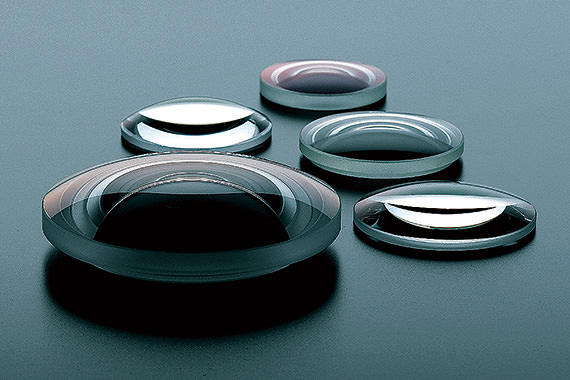
Aspherical lenses are capable of correcting distortions and achieving a compact design. Canon has adopted them since as early as 1971. Four methods of manufacturing have been established to produce ground and polished, moulded glass, moulded plastic, and replica aspherical lenses respectively.
The new EF mount is a fully electronically-controlled mount system that completely does away with mechanical coordination such as aperture operation and transmission of the aperture value, and performs communication with the camera body through electrical signals. The adoption of the new mount design was not intended solely for the introduction of an AF system. It was an evolutionary effort that took into consideration future advancements of the camera. While all of the AF SLR cameras by Canon's competitors had a motor built into the camera body, Canon was known for using an in-lens motor for its EF lenses. Today, almost all the camera manufacturers adopt an in-lens motor to drive the AF mechanism, a proof of Canon's foresight. Although there were only a few lenses in the lineup immediately after the new mount was developed, it took no time before a solid EF lens system was built with the successive release of USM lenses, which made possible almost silent AF operation with the use of an "ultrasonic motor", as well as the "EF50mm f/1.0L USM" and other super fast lenses with a mount diameter that is considerably larger than that of the FD mount.
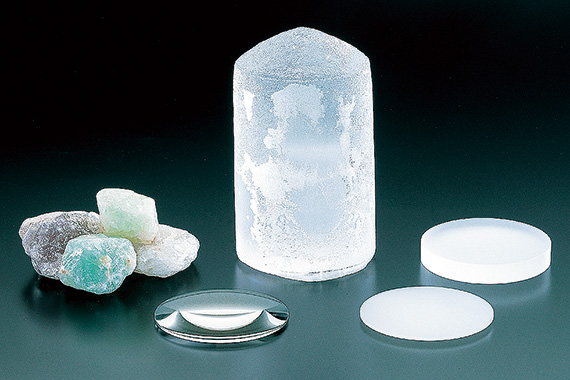
Fluorite lenses are useful for correcting chromatic aberrations. In the late 1960s, Canon succeeded in developing an artificial crystallization technology for manufacturing fluorite lens elements for the high-end range, such as the L lenses. This was yet another unique attempt by Canon, as almost no other camera manufacturers back then had adopted fluorite lens elements for their SLR camera lenses.

UD lenses were developed by Canon in the late 1970s. UD lenses are also used for correcting chromatic aberrations just like the fluorite lenses, with two UD lenses having a corrective effect comparable to that of one fluorite lens element. In the 1990s, Canon succeeded in developing the "super UD lens", which boasts an even higher level of performance.
Ring USM
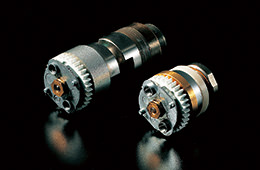
Micro USM
Almost all the camera manufacturers today make use of ultrasonic motors (USM) for driving the AF mechanism. However, it was Canon who first incorporated USM into their EF lenses. Only the "ring USM" was available at first, which was usable only for large-diameter lenses. The more compact "micro USM" was later developed for use on smaller-diameter ones.
Releases the "EF35-70mm f/3.5-4.5", "EF35-105mm f/3.5-4.5", and "EF50mm f/1.8"
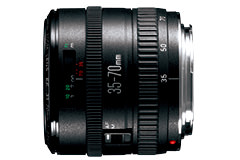
EF35-70mm f/3.5-4.5
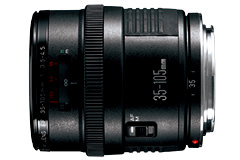
EF35-105mm f/3.5-4.5
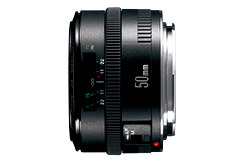
EF50mm f/1.8
Releases the diagonal fisheye lens "EF15mm f/2.8 Fisheye", which is built in with an AFD (Arc Form Drive) motor, and the "EF28mm f/2.8", which uses a glass-molded aspherical lens element
Releases the "EF70-210mm f/4" and "EF100-300mm f/5.6" telephoto zoom lenses
Releases the high-performance "EF100-300mm f/5.6L", which makes use of fluorite and UD lens elements
Releases the "EF135mm f/2.8 Softfocus", which comes with a softfocus mode
Releases the "EF28-70mm f/3.5-4.5", which adopts an aspherical lens element and a flare-blocking diaphragm
«World's First»
Releases the "EF300mm f/2.8L USM", the first interchangeable lens for SLR cameras to be equipped with an ultrasonic motor (ring USM)
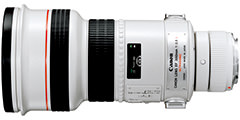
EF300mm f/2.8L USM
Releases the "EF50mm f/2.5 Compact Macro" and "EF50-200mm f/3.5-4.5"
Releases the "EF28-70mm f/3.5-4.5 II", "EF35-135mm f/3.5-4.5", and "EF50-200mm f/3.5-4.5L"
Releases the "EF35-70mm f/3.5-4.5A", a lens without a focusing ring, designed exclusively for AF
Releases the "EF24mm f/2.8", which adopts a rear focusing system to reduce astigmatism, as well as the "EF200mm f/1.8L USM" and "EF600mm f/4L USM
Releases the "EF100-200mm f/4.5A", a lens designed exclusively for AF
Releases the "EF28-80mm f/2.8-4L USM", which adopts two ground and polished aspherical lens elements to reduce distortions and astigmatism
«World's First»
Releases the "EF50mm f/1.0L USM", which boasts an amazing maximum aperture of f/1, the largest among interchangeable lenses for 35mm format SLR cameras
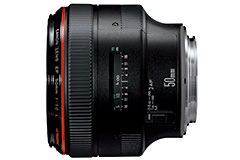
EF50mm f/1.0L USM
Releases the "EF85mm f/1.2L USM", which employs a ground and polished aspherical lens element and is the brightest among lenses of the same class, as well as the "EF80-200mm f/2.8L", a high-performance telephoto zoom lens
Releases the "EF20-35mm f/2.8L", which is built in with an aspherical lens element and an inner and rear focusing system
Releases the "EF35-80mm f/4-5.6 PZ", which is built in with a motorized zoom and designed exclusively for AF, and the "EF35-135mm f/4-5.6 USM", the first Canon lens to adopt a rear focusing mechanism
Releases the "EF100mm f/2.8 Macro", which is equipped with a focus limiter
Releases the "EF70-210mm f/3.5-4.5 USM" and "EF100-300mm f/4.5-5.6 USM" compact telephoto zoom lenses
Releases the "EF35-80mm f/4-5.6", a low-cost standard zoom lens
Releases the compact "EF35mm f/2", which comes with a simple lens construction and a large maximum aperture
Releases the "EF80-200mm f/4.5-5.6", a low-cost telephoto zoom lens
Releases the "EF50mm f/1.8 II", a lightweight and low-cost lens that adopts a Gauss-type lens construction
Releases the "EF75-300mm f/4-5.6", a low-cost telephoto zoom lens with a wider zoom range
Releases the "EF400mm f/2.8L USM", which is equipped with two UD lens elements to correct chromatic aberrations, an electronic ring for MF and a built-in focus preset mechanism, as well as the "EF35-105mm f/4.5-5.6", "TS-E24mm f/3.5L", and "TS-E45mm f/2.8"
«World's First»
Releases the "TS-E90mm f/2.8", the world's first mid-telephoto tilt-shift lens for 35mm format cameras
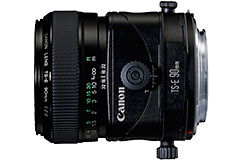
TS-E90mm f/2.8
Releases the "EF28-80mm f/3.5-5.6 USM", which adopts a replica aspherical lens element, and the "EF100mm f/2 USM", which is equipped with a rear focusing and a full-time MF system
Releases the "EF14mm f/2.8L USM", "EF200mm f/2.8L USM", and "EF300mm f/4L USM"
Releases the "EF500mm f/4.5L USM", which employs fluorite and UD lens elements, as well as a ring USM and an inner focusing system to achieve silent AF operation
Releases the "EF35-80mm f/4-5.6 USM", which comes with an ultrasonic motor
Releases the "EF80-200mm f/4.5-5.6 USM", "EF35-105mm f/4.5-5.6 USM", "EF75-300mm f/4-5.6 USM", and "EF20mm f/2.8 USM"
Releases the compact "EF85mm f/1.8 USM" mid-telephoto lens, which supports full-time MF and adopts a rear focusing system to correct the different types of aberrations
Releases the "EF28-105mm f/3.5-4.5 USM", which employs multiple lens groups to achieve the smallest and lightest design among lenses of the same class
«World's First»
eleases the "EF35-350mm f/3.5-5.6L USM", an interchangeable lens that boasts a 10x zoom as well as silent and high-speed AF operation
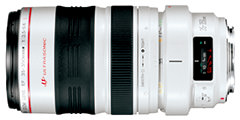
EF35-350mm f/3.5-5.6L USM
Releases the "EF20-35mm f/3.5-4.5 USM", which zooms with the second lens group to reduce distortions, and incorporates a flare-blocking diaphragm in the first lens group
Releases the "EF400mm f/5.6L USM", which achieves high image quality and high-speed and silent AF operation with the use of a super UD lens element
Releases the "EF50mm f/1.4 USM", which is based on the design concept of the FD50mm f/1.4 and incorporates a micro USM that supports full-time MF
«World's First»
Releases the "EF28-80mm f/3.5-5.6 II USM", the first in the world to adopt an optical design that consists of only lead-free lens elements
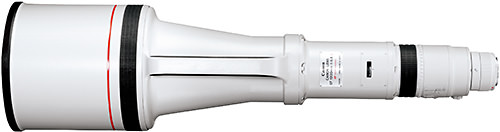
EF1200mm f/5.6L USM
«World's First»
Releases the "TS-E90mm f/2.8", the world's first mid-telephoto tilt-shift lens for 35mm format cameras
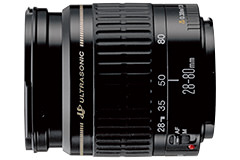
EF28-80mm f/3.5-5.6 II USM
Releases the "EF28-70mm f/2.8L USM", which adopts a ground and polished aspherical lens element to achieve high image quality as well as a large diameter at the front surface
Releases the "EF70-200mm f/2.8L USM", which incorporates four UD lens elements, as well as the "EF75-300mm f/4-5.6 II USM"

Born in Kanagawa Prefecture in 1961. After working four years as an assistant to photographer Koichi Saito, Kawada became a freelance photographer in 1997. Currently, his works centre on shoots and review writing for camera magazines and other publications.




Join the Conversation