Compositions Exuding a Sense of Space
Beginner
How do we take photos that exude a sense of space? What are the effective

- 0
- 0
- 0
How do we take photos that exude a sense of space? What are the effective
How do we take photos that exude a sense of space? What are the effective compositions, lens effects and camera functions that we can use within a limited frame? In this article, let's learn some tricks to maximize the sense of space. (Written by: Tatsuya Tanaka)
A perception of space can be derived by employing a composition that appears wider than it looks. Although an angle of view close to that of the human eye has a focusing distance of 24 mm, the sense of distance between the foreground and background is close to 50 mm. As a result, the sense of depth in the overlap between this horizontal angle of view and the front and rear becomes a key point in the perception of space. You can use a lens with a focusing distance of 24 mm or less if you are just thinking of the lens work. A good example of this is shown in the photo below. A sense of space can also be felt by the human eye in compositions that shoot the main subject standing alone in the centre of the screen while making use of the background and so on in the surrounding areas.
Composition methods such as the rule of thirds, the rule of halves and leading lines etc. can be used to reproduce a sense of space.
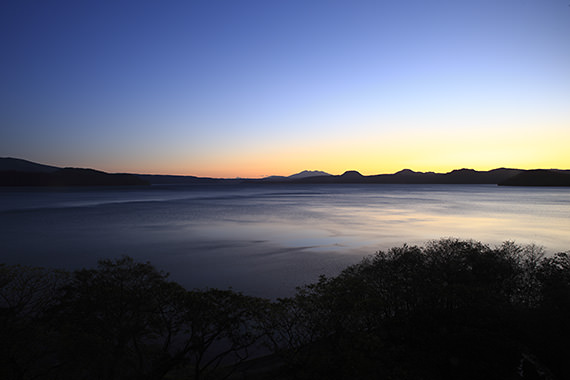
EOS-1Ds Mark III/ EF24-70mm f/2.8L USM/ FL:24mm/ Aperture-priority AE (1sec., f/10, -0.3EV)/ ISO 100/ WB: Daylight
Wide-angle shot of a landscape that was taken at dawn from a high ground. Using the wide angle of view unique to a wide-angle lens, I managed to effectively shoot the beautiful gradation in the morning glow that extended from the bright areas towards the dark areas in all four directions. By using the boundary between the sky and mountains to divide the composition into two, a gradual representation of the difference in brightness resulting from the light shining from the right side towards the dark areas on the left side was captured, thereby creating a greater sense of space.
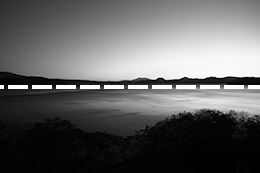


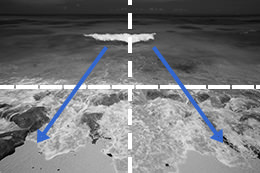
The wide expanse of the sea is emphasised by composing an image of the waves approaching and spreading out, from the white wave crests at the top of the screen up to the water’s edge. A sense of distance is also reproduced by placing the horizon in the background.
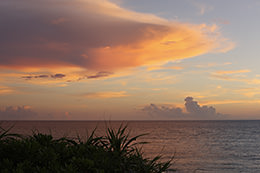
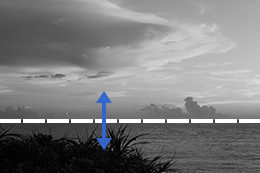
Although this composition was targeted at the clouds at sunset, one cannot feel a sense of space if you capture just the sky as there is nothing to contrast it against. Therefore, the land in front is captured in the foreground as a contrast to the ocean in the distance to reproduce a sense of space.

Born in 1956, Tanaka is one of the rare photographers who produce works across a wide variety of genres from an original perspective. These genres range from objects in our daily lives, such as insects and flowers, to landscapes, skyscapes, and celestial bodies. Besides photography, Tanaka has also developed his own approach in post processes including retouch and printing.

Join the Conversation