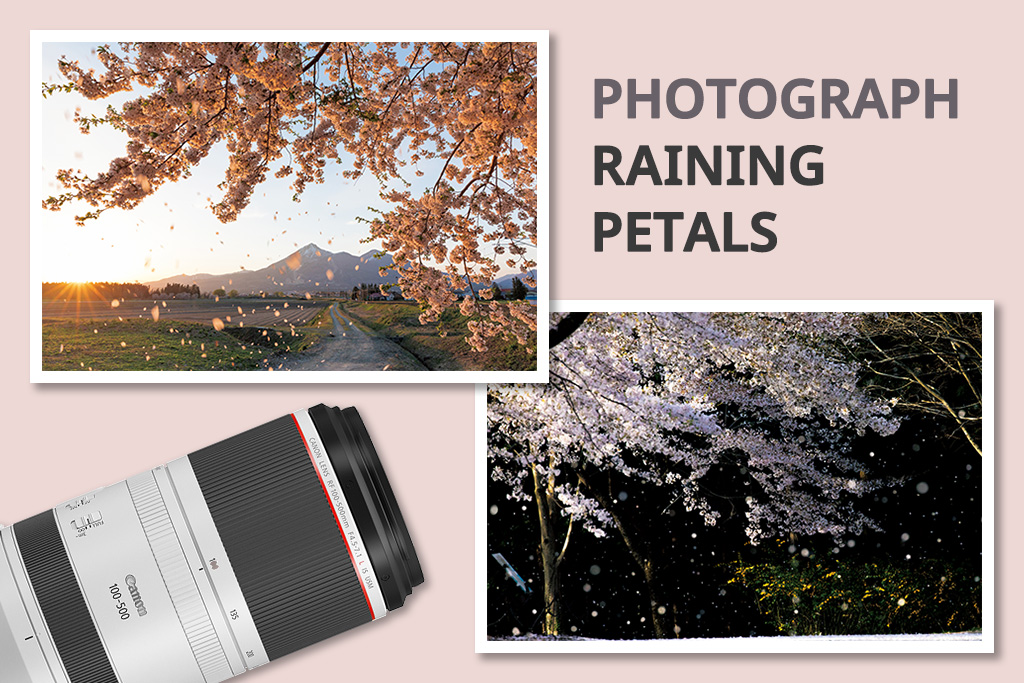
Techniques for Dramatic Shots of Raining Flower Petals
Beginner
How do you capture a timeless shot of that breath-taking scene of petals blown about by the breeze? Here are a few techniques.



- 0
- 0
- 0
How do you capture a timeless shot of that breath-taking scene of petals blown about by the breeze? Here are a few techniques.
Flower petals falling from trees are one of those fleeting scenes that can result in timeless images. Here is how you can perfect your shot of them, be it against a dark background or in backlight. (Reported by: Jiro Tateno, Takashi Karaki, Digital Camera Magazine)
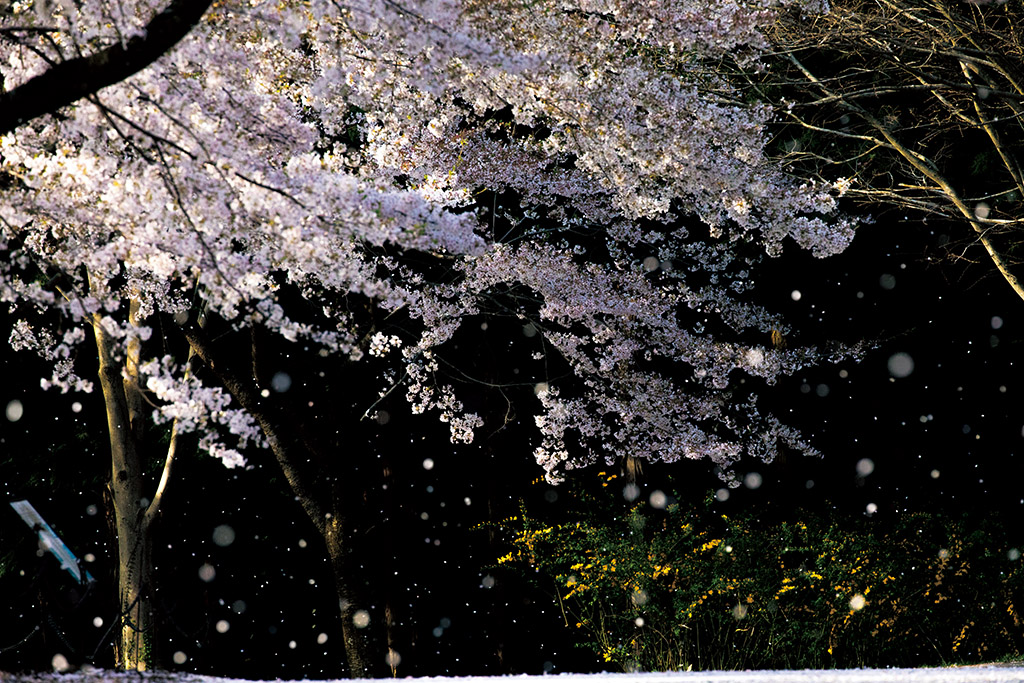
EOS 5D Mark IV/ EF100-400mm f/4.5-5.6L IS II USM/ FL: 400mm/ Manual exposure (f/9, 1/400 sec)/ ISO 160
Photo by: Takashi Karaki
The story behind the shot
Flowers are beautiful in full bloom, but they can also look very impressive when they dance in the wind as they fall. In Japanese culture, one image extremely symbolic of spring is that of “hanafubuki”—snowing sakura petals, and this was what I wanted my shot to express.
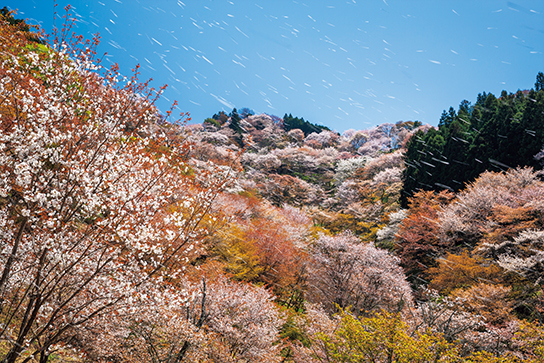
We tend to pay attention only to the subject when we shoot, but the background is very important, too. The pale falling sakura petals would have become invisible if the background was too light, as the shot below demonstrates.
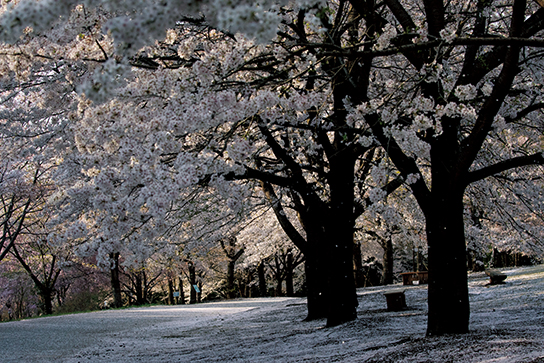
Pale petals won’t stand out against a pale background. To provide adequate contrast, choose a location that provides a dark background.
To create a dreamy feel and make the falling sakura look like falling snow, I decided to turn them into bokeh circles. This also draws more attention to them. The longer the focal length, the more obvious the bokeh. Considering the balance with other elements in the scene, I felt the best results were achieved at 400mm.
Shot at 100mm
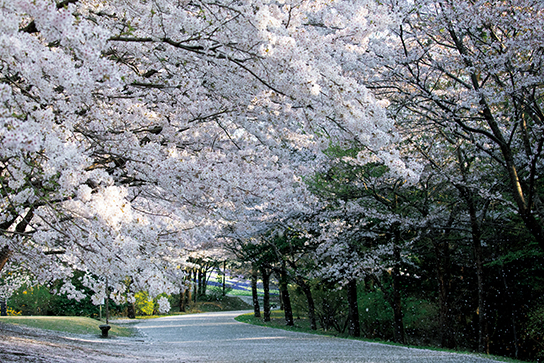
At a shorter focal length, the falling flower petals will be too small and the bokeh created from them not obvious.
Remember: You are effectively turning the falling flowers into foreground bokeh. Remember to place your focus somewhere at the back to defocus the front. Here, I chose to shoot a long boulevard of trees, and placed the focus on the trees at the far back.
Learn more about using telephoto bokeh in:
5 Things to Try with a Telephoto Lens
Learn how to achieve a similar effect by using a flash on falling rain in:
Built-in Flash Techniques #6: Magical Bokeh Circles on a Rainy Day
Once you have fixed your shooting spot and framing, you just need to wait for the flowers to start falling. To freeze small petals like those of the sakura, you need a shutter speed of at least 1/400 second. (Jiro Tateno explores shutter speed in Scene 2 below)
If you capture the sakura at the right moment and the bokeh looks just right, you will achieve the same timeless, romantic look of petals snowing in spring.
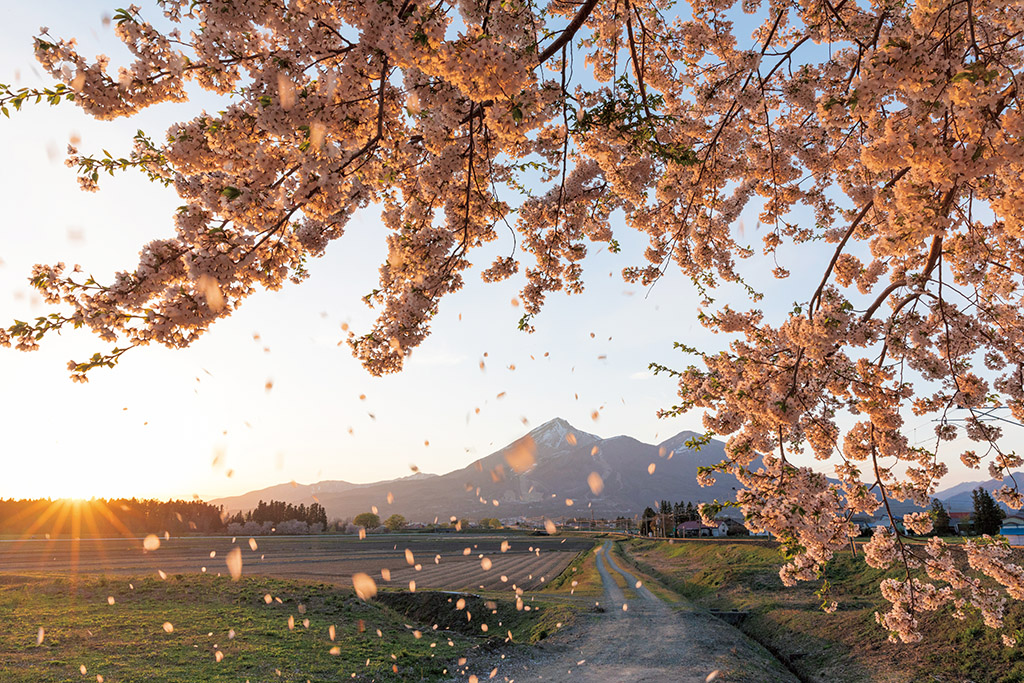
EOS 5D Mark IV/ EF24-70mm f/2.8L II USM/ FL: 27mm/ Manual exposure (f/11, 1/160 sec)/ ISO 320/ WB: 4,900K
Photo by: Jiro Tateno
In Scene 1, we learned that pale petals generally don’t stand out against a pale background. However, if the lighting conditions are right, you might have enough contrast for the shot to work even against a light-coloured backdrop.
The story behind the shot
Blown off the branches by the breeze, these falling sakura petals glittered in the backlight from the evening sun, turning an otherwise ordinary landscape into a dramatic scene. To preserve the dramatic feel, I experimented with various shutter speeds to see which one made the flowers stand out the best.
The speed at which petals fall depends on the strength of the wind, so you need to take this into account and adjust accordingly.
Too fast; petals are too small
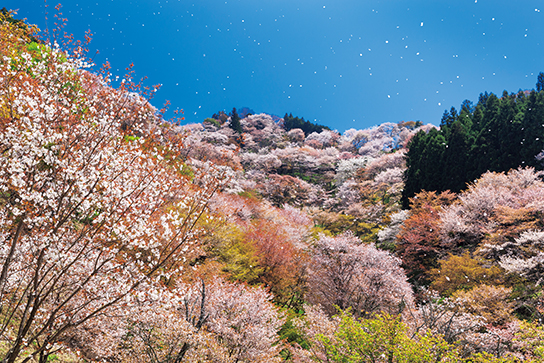
Shot at 1/125 sec
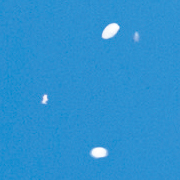
When the shutter speed is too fast, the tiny petals will be captured as dots—too small to stand out especially in a wide-angle shot.
Too slow; doesn’t look like petals
Shot at 1/30 sec
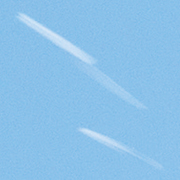
If the shutter speed is too slow, the petals appear as streaks—not quite the look we are aiming for.
Just right: Makes the petals look slightly larger
The right shutter speed captures just enough motion blur to make the petals look slightly bigger and more obvious.
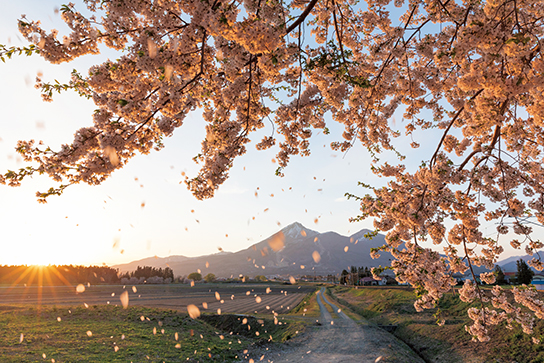
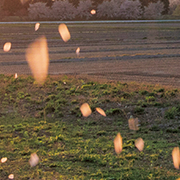
For this shot, I got my ideal results at 1/160 second. As I had also narrowed the aperture to f/11 to capture the starburst, I changed my ISO speed to adjust the exposure.
Tip: Moving nearer to the tree not only helps to make the petals look bigger, it can also enhance the ultra-wide-angle perspective, which contributes to the impact.
For more techniques to make your landscapes look more impressive, check out:
Stunning Starscapes: Photographing a Spectacular View of Cherry Blossoms and the Milky Way at Night
Minimalist Landscape Photography with the Sky
Fantastic Landscapes: Layering a GND Filter with Another Filter
2 Landscape Photography Tricks to Transform Your Images On the Spot
Receive the latest update on photography news, tips and tricks.
Be part of the SNAPSHOT Community.
Sign Up Now!