Lens Technique for Landscapes: Imitating the Wide Angle Feel at 67mm
Beginner
Besides the scope that wide-angle lenses capture, you may have also learned about how they can enhance perspective and increase the sense of depth. However, depending on the scene, a longer focal length might work better. This doesn’t mean that you have to sacrifice depth and perspective—it’s all about how you use your gear! Find out how a photographer shot at 67mm and captured both the scale and density of this sprawling field of susuki grass (Chinese silver grass/pampas grass) while imitating the wide-angle look. (Reported by: Yoshinori Takahashi, Digital Camera Magazine)
Published on June 27, 2022 Updated On June 23, 2022
Reading Time
0
0
0
The story behind the shot
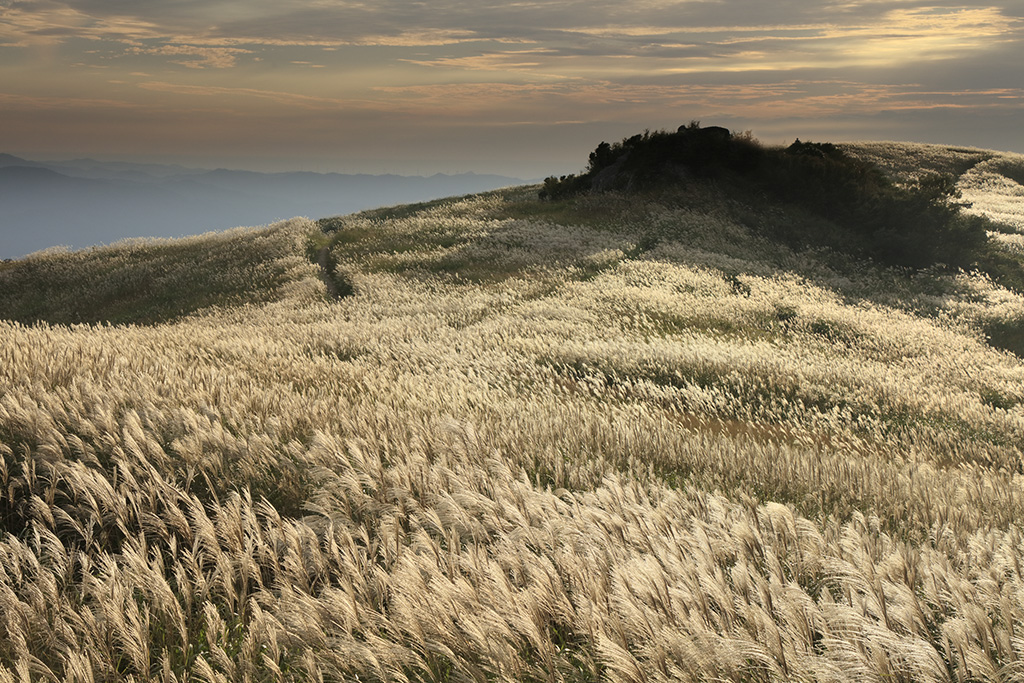
Oishi-kogen Highlands is one of the most famous places for seeing susuki grass: some say it is the best in Western Japan. In the right lighting, it is like a giant golden carpet that extends for miles. Aiming to capture such a scene, I went there one autumn evening, reaching at around 4pm to be on standby.
Observing the location, I noted a few things:
1. The grass was growing really densely This was something I wanted to reflect in my image, so I would have to ensure that my composition and lens choice didn’t take away from it.
2. Thick clouds were forming low in the sky and the nearby tree stumps were casting long shadows I originally wanted to shoot closer to sunset, which was about an hour away. The warmer light would have brought out the colours better. However, with the increasing cloud cover, I didn’t want to risk missing the glowy lighting entirely and so decided to start shooting immediately, even though it was earlier than intended. Instead, I set the white balance to “Cloudy” to enhance the field’s golden colour.
Step 1: Use a moderately long focal length
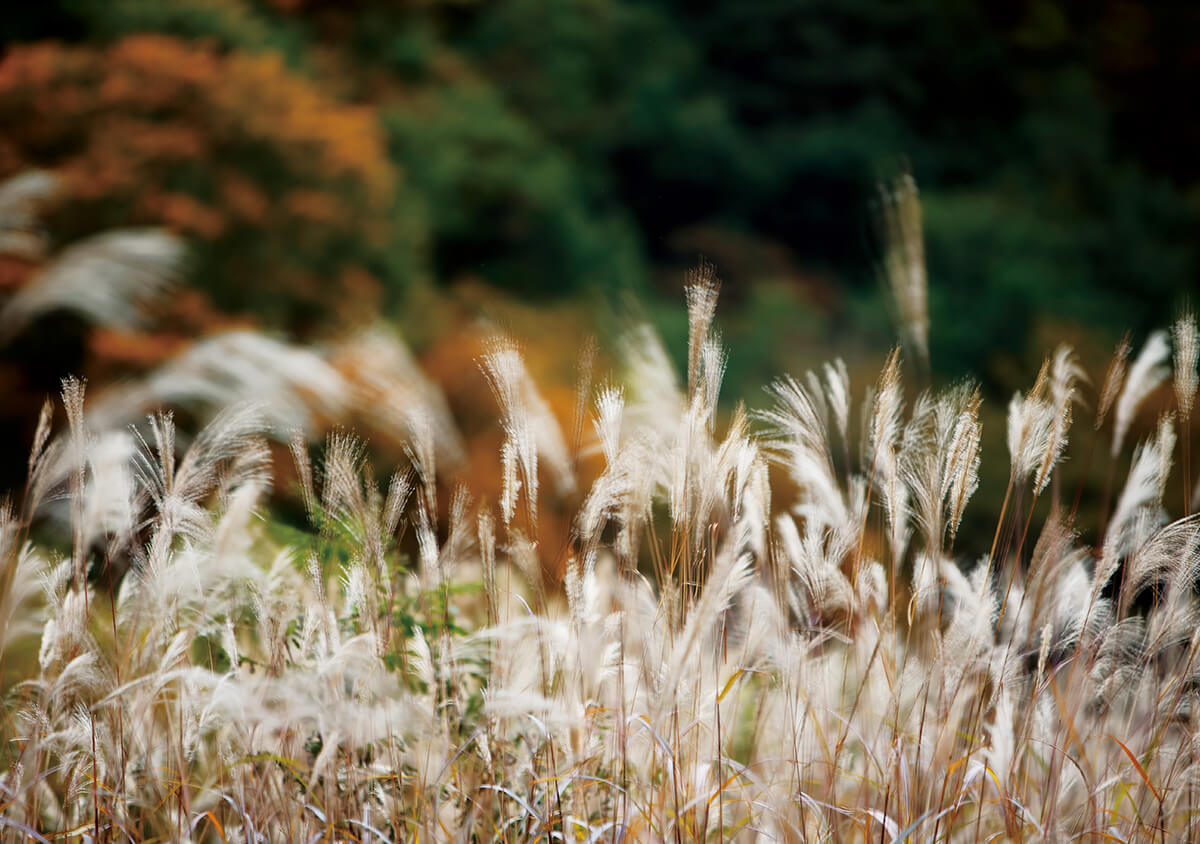
For some vast scenes like grass, wheat, or flower fields, it is important to capture their density for greater impact. If you shoot these with a wide-angle lens, they tend to look too sparse. Instead, try shooting with a moderately long focal length. Here, I found that a medium telephoto focal length of 67mm gave just enough telephoto compression to “stack” the grass in the foreground and background closer together and bring out their density.
Why not shoot with a wider angle? There wasn’t a lot of susuki grass right front of me, so it was hard to get an impactful composition with a wide-angle focal length.
Why not go even longer? Incorporating perspective is crucial for portraying the vastness of the field. If the focal length is too long, the compression would flatten the perspective and make the scene look less vast. Here, a moderately long medium telephoto focal length of 67mm achieved just the right amount of compression.
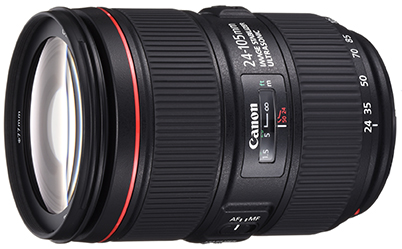
For this shot, I zoomed in on my EF24-105mm f/4L IS II USM. Your standard zoom kit lens should also be able to reach at least 70mm in full-frame equivalent terms.
Tip: Use a narrower aperture At longer focal lengths, the depth of field will be shallower than at a wider focal length. You will need a narrower aperture to ensure that most of the field is in focus. For this shot, I deep focused by stopping down to f/13.
Step 2: Include foreground elements for a wide-angle-like perspective
One common wide-angle lens composition technique is to put something in the foreground, close to the camera. Here, I did the same to mimic a wide-angle look, incorporating as much foreground as I could. It also gives the image more depth.
Using a narrower aperture to achieve deep focus also contributed to the wide-angle-like look, as wide-angle shooting naturally gives a larger depth of field.
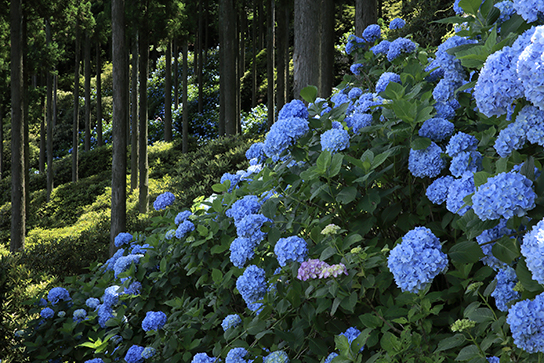
What focal length range do you think this was shot at?
Answer: 70mm
Placing the bush of flowers in the foreground gives a sense of depth to the image even if you are shooting at a longer focal length.
Step 3: Shoot from a high position and angle
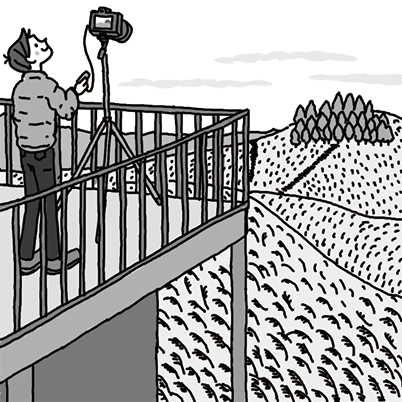
To get more elements in focus, besides increasing the aperture to deep focus, you can also adjust your shooting height and angle so that more elements are inside the focal plane. Here, I did so by shooting from a high position (with the camera above my head) and high angle (with the camera tilted downward).
I went up to the observation deck with a tripod that was taller than me. The higher position allowed greater distance between my camera and the susuki grass in the foreground, increasing the proportion of the field that appeared in focus. As a bonus, it also allowed more of the field to be captured.
Know this: When your camera is higher than you If your camera has a Vari-angle LCD screen, you can flip it out and rotate it to help you to see better. Alternatively, use the Remote Live View shooting function on the Camera Connect app.
Tip: Take extra steps to avoid camera shake if your centre column is fully extended
Although I was using a tripod, I had the centre column fully extended, which makes the setup less stable. Apply precautions to reduce camera shake. If you are using a DSLR camera, shoot in mirror lockup mode to avoid mirror vibrations.
About the location: Oishi Kogen Highlands, Japan Surrounding the 870m-high Oishigamine peak, the Oishi Kogen Highlands in Wakayama Prefecture, Japan is a vast plain filled with susuki grass. On a clear day, you can see the Kii Channel, and even the island of Shikoku in the distance. It’s uneven terrain, so go in good, supportive shoes.
If you decide to shoot the grass close up, this article has a hack for capturing them swaying in the wind…even if there’s not enough wind!