Effective Composition: Drawing Attention to a Tiny Frog in a Flower
Beginner
Forget up-close and large. Sometimes, you want to draw attention to subjects in a way that's more subtle. Find out one way to do so here.


- 0
- 0
- 0
Forget up-close and large. Sometimes, you want to draw attention to subjects in a way that's more subtle. Find out one way to do so here.
When photographing tiny animals or insects, it’s tempting to capture them close up so that they take up a huge part of the frame. But that’s not the only way to draw attention to them! In this article, nature photographer Kazuha Tani, best known for her pictures of frogs on flowers, shares some tips for making small subjects stand out even when you incorporate much bigger things in frame. (Reported by: Kazuha Tani, Digital Camera Magazine)
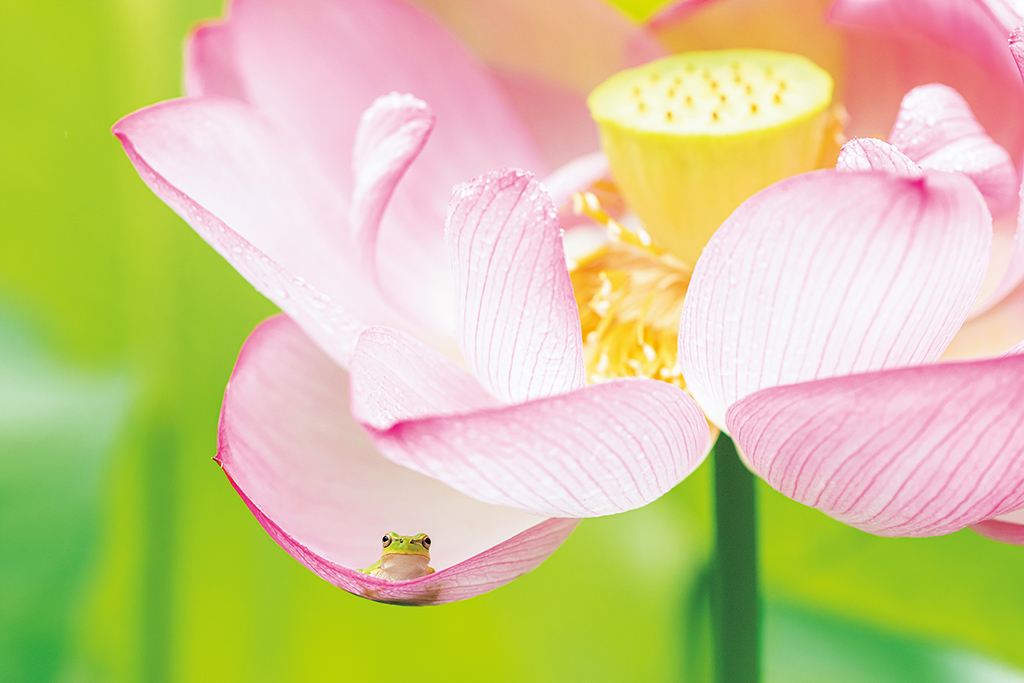
EOS 7D Mark II/ EF100mm f/2.8L Macro IS USM/ FL: 100mm (160mm equivalent)/ Manual exposure (f/3.5, 1/800 sec)/ ISO 400/ WB: Auto
I found this Japanese tree frog sitting on a lotus flower one summer morning. I could have simply taken a close-up of just the frog, but I wanted to show more of the context. Thus, I stood a bit further back to include most of the flower in the frame, and then made use of the Rule of Thirds composition to draw viewers’ attention to the frog.
The flower in full bloom fills up most of the frame, which not only adds life and colour to the image but also provides a sense of scale: you can see how tiny the frog is in comparison!
In this shot, the main subject is the frog. It is very important that the frog commands more attention than the huge, colourful flower behind it.
It helps to remember that the Rule of Thirds isn’t simply about the lines that divide the image into thirds, but also about the intersections! Objects placed near the intersections will somehow draw more attention.
Learn more in: Composition Basics (4): Diagonal Composition and the Rule of Thirds
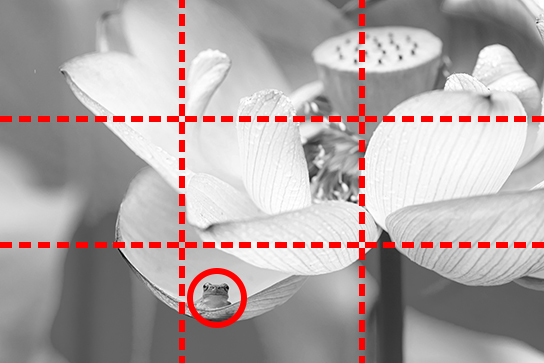
Here, I placed the petal that the frog was sitting in at one of the intersections. It’s like a signal to the viewers to say, “Look at me!”
Enhance the effect: Make sure the frog looks lively. The eyes are important!
Anything that appears to have life and expression will have a stronger sense of presence in an image. I carefully looked for an angle that made the frog look lively and give it a bit of personality.
Eyes that are blurred and out of focus can make subjects look less appealing. I made sure that the frog’s eyes were sharply in focus before I released the shutter.
When your subject is extremely tiny, you might need to use additional ways of drawing the viewer’s eye to it.
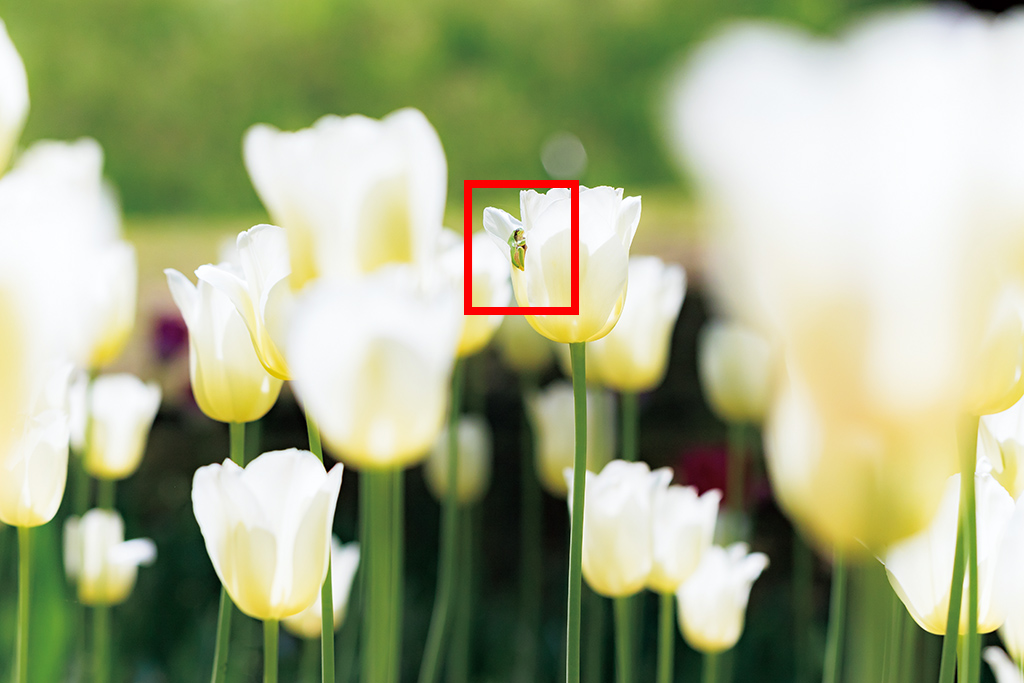
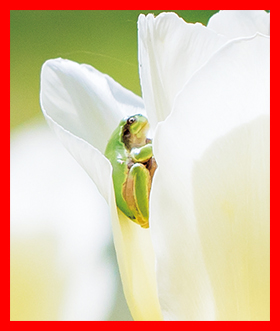
One other technique you can use is to blur out the foreground (create foreground bokeh) and make use of leading lines to create depth and guide the viewer’s line of sight.
In the image below, I shot from a low position to capture the flower stems, which form vertical leading lines that lead the viewer’s eyes to the tiny frog in the centre.
Of course, it is best if you can get the ideal shot in-camera. However, in some shooting conditions, such as when your subject is in a dark place (for example, when a plant has cast a shadow over it), you will need a bit of post-processing help.
For the main shot of the frog in the lotus flower, I made the following adjustments to brighten the image:
- Increased “Shadow”
- Increased “Whites”
This caused some parts of the image to become too bright, so I decreased “Highlights” to moderate them.
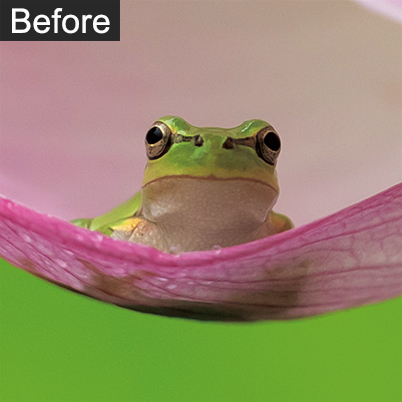
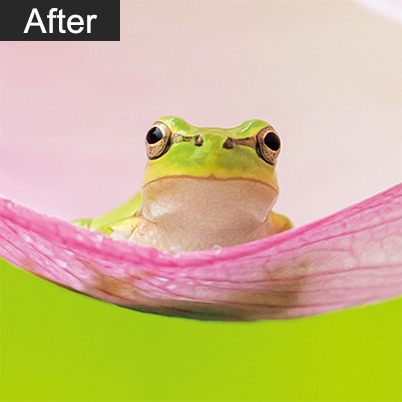
The adjustment values will differ for every image. This image was adjusted using the following values:
- Highlights: -44
- Shadows: +33
- Whites: +11
Also see:
Understanding Dynamic Range: How to Avoid Unnecessary Blown Highlights
---
New to macro photography? Learn about some essential techniques and useful features in:
Professional Composition Techniques (4): Using Special Lenses
Macro Photography in Low Light: Preventing Camera Shake
Shooting Techniques: Macro Photography
Allowing you to achieve 1:1 magnification from a closest focusing distance of 30cm that won’t annoy small living things, the EF100mm f/2.8L Macro IS USM, which comes with image stabilisation, is a very popular choice for insect photography, along with other types of macro photography. Learn more about what it can do in:
EF100mm f/2.8L Macro IS USM – Mid-telephoto Macro Lens with Hybrid IS
Macro Photography: Dew, Foliage and Flowers
How to Photograph Water Droplets that Sparkle!
Beginner's Guide to Underwater Macro Photography
Receive the latest update on photography news, tips and tricks.
Be part of the SNAPSHOT Community.
Sign Up Now!


_baby_thumbnail.jpg)

Join the Conversation