Camera FAQ #20: How Do I Photograph Flowers More Dramatically?
Beginner
Make your flower photos look more interesting with these two techniques.




- 0
- 0
- 0
Make your flower photos look more interesting with these two techniques.
When shooting flowers, do you find that your pictures somehow start looking the same after a while? Here are two techniques to use the background creatively to make your photos of flowers pop and stand out. (Reported by: Kazuo Nakahara, Takashi Namiki)
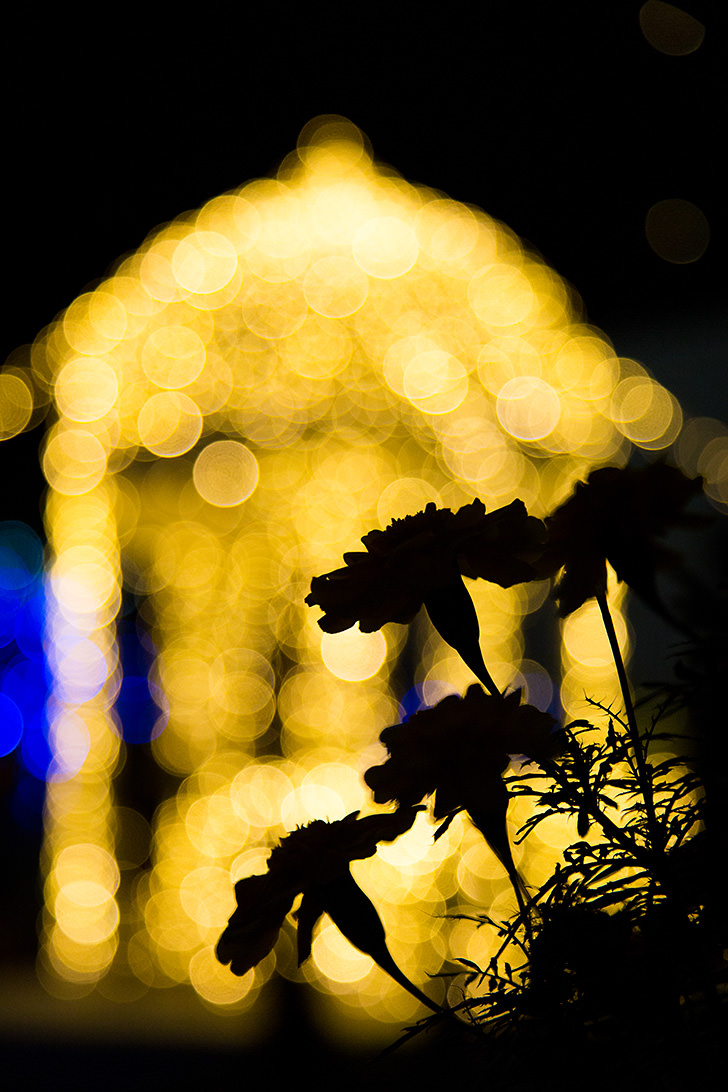
EOS 5D Mark III/ EF24-105mm f/4L IS USM/ FL: 80mm/ Manual exposure (f/4, 1/160 sec., EV±0)/ ISO 1600/ WB: Tungsten Light
I found some flowers near golden decorative lights that were shining brightly. It was difficult to capture the flowers brightly in such dark conditions, so I went the unconventional route and took an underexposed shot to capture the flowers as silhouettes.
The contrast between the sharp outlines of the flower silhouettes and the defocused bokeh circles of light in the background are essential for an impactful shot. Make sure that the silhouettes are sharply in focus. My EOS 5D Mark III had a little trouble focusing on the right spot, so after using AF, I fine-tuned the focus using the full-time manual focus override mode. You might not need to do that if you are using a newer camera with better low-light AF capabilities.
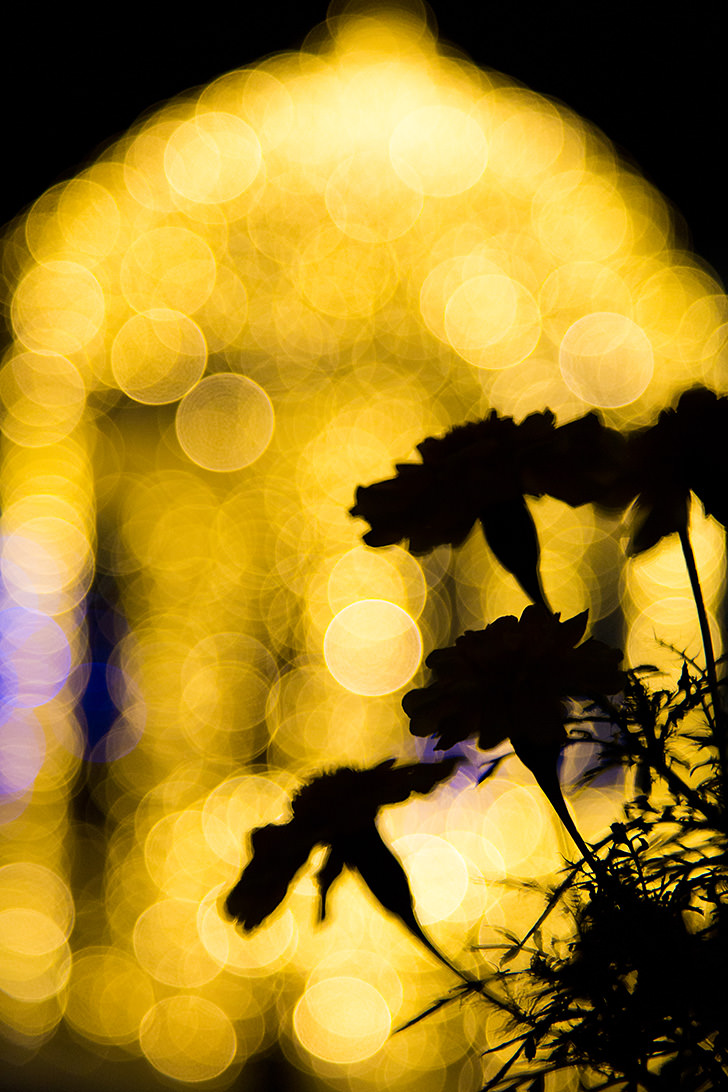
When the point of focus is past the silhouettes
EOS 5D Mark III/ EF24-105mm f/4L IS USM/ FL: 105mm/ Manual exposure (f/4, 1/160 sec., EV±0)/ ISO 1600/ WB: Tungsten Light
The silhouettes look darker and more dramatic if the background looks brighter. I decided to create bokeh circles from all the lights in the background, and set the lens to maximum aperture to make the circles as large as possible.
Learn how to turn light sources into bokeh circles here:
Lens FAQ #8: Where Should I Focus On to Capture Beautiful Bokeh Circles?
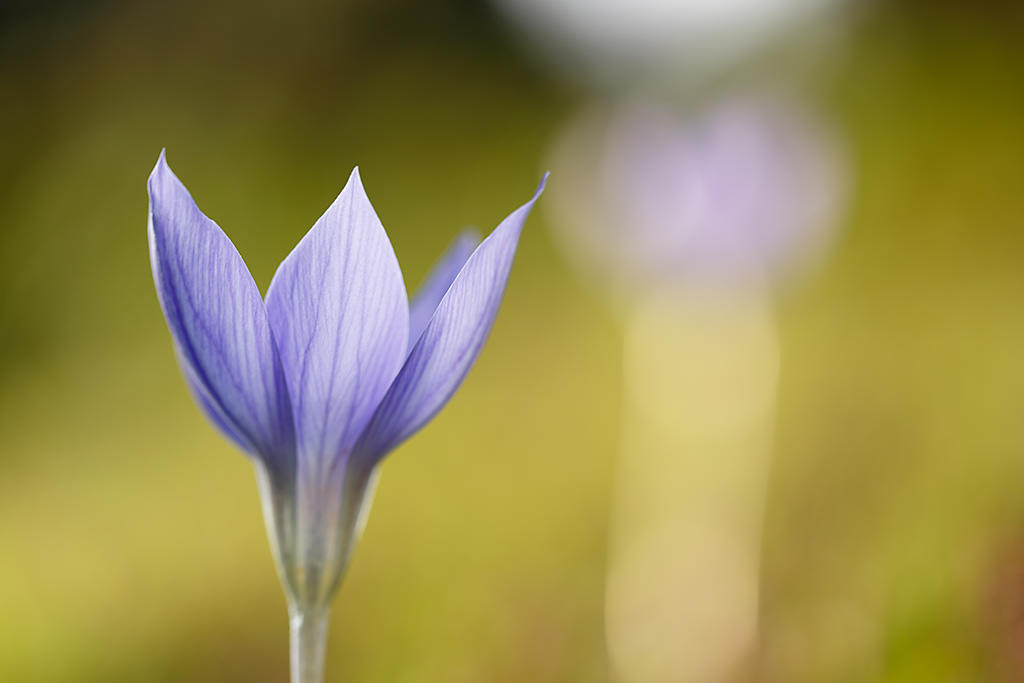
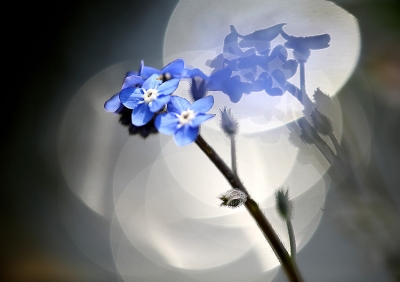
EOS 6D/ EF100mm f/2.8L Macro IS USM/ FL: 100mm/ Aperture-priority AE (f/2.8, 1/320 sec., EV+1.0)/ ISO 100/ WB: Daylight
I captured the only two flowers that were in bloom, using a diagonal composition. Here, I adjusted the angle so as to achieve a line of sight that extends from the subject toward the blurred out flower in the background.
I could have narrowed the aperture a little to bring out the form of the second flower (blurred in the background) a little more. However, because the background was so close to the main flower (main subject) in this scene, a narrower aperture would have made the background stand out a little too much, so I used the maximum aperture of f/2.8.
To create a diagonal composition, it is important to arrange the main subject so that it does not take up too much of the frame. If the main subject is too large, there will not be enough space to place the other flower in the frame, making it difficult to create any contrast.
For more tips on photographing flowers, check out:
Flower Photography: Useful Techniques and Camera Features
2 Ideas for Photographing Flowers in the Evening
Photographing Flowers: How to Create Brilliant Bokeh Circle Spotlights with a Macro Lens
Receive the latest update on photography news, tips and tricks.
Be part of the SNAPSHOT Community.
Sign Up Now!

Join the Conversation